


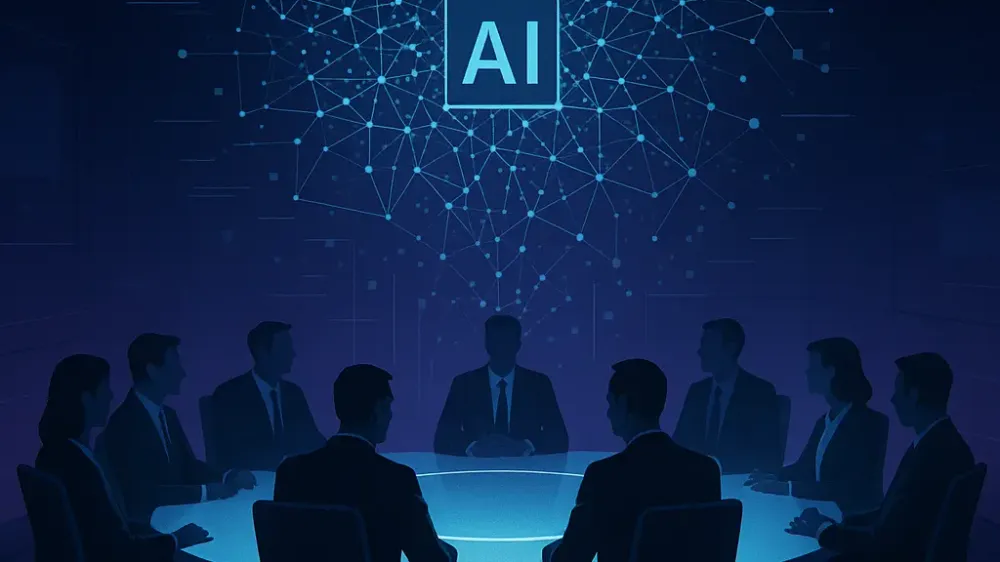
The biggest AI failure has nothing to do with technology.
I've spent two decades helping Fortune 500 executives navigate digital transformation. The pattern is always the same. Massive AI investment. Brilliant technical teams. Sophisticated platforms.
And then the projects stall.
Here's what I've learned: only 1% of companies believe they've reached AI maturity. The biggest barrier? Leadership readiness.
Not the technology. Not the budget. Leadership.
The Executive Blind Spot
Smart executives recognize AI's transformative potential. They approve budgets, hire talent, and launch initiatives. But they miss the fundamental shift AI demands in how organizations operate.
33.1% of organizations have appointed Chief AI Officers. Another 43.9% believe they should. Yet these same companies struggle with basic AI governance frameworks.
The gap between investment and execution is leadership structure.
Traditional hierarchies can't handle AI's cross-functional impact. Marketing AI touches customer data. Operations AI affects supply chains. HR AI influences talent decisions. Every department needs AI fluency, but most lack leadership frameworks to coordinate these efforts.
What Forward-Thinking Companies Do Differently
Lululemon appointed Ranju Das as Chief AI and Technology Officer. Danaher promoted Martin Stumpe to Chief Technology and AI Officer. These aren't symbolic gestures.
They're structural recognition that AI success requires dedicated C-suite leadership with direct reporting lines and cross-functional authority.
But creating new roles isn't enough. The most successful AI implementations combine three leadership elements: technical fluency, strategic oversight, and cultural transformation capabilities.
Technical fluency means understanding AI's capabilities and limitations without getting lost in implementation details. Strategic oversight involves aligning AI initiatives with business objectives and measuring real impact. Cultural transformation addresses the human side of AI adoption.
Most executives excel at one, maybe two of these areas. Few master all three.
Building Your AI Leadership Framework
Here's how to structure AI leadership that actually works:
Start with governance, not technology. Define decision rights, approval processes, and success metrics before launching AI initiatives. Who decides which AI projects get funded? How do you measure AI ROI across different business units? What ethical guidelines govern AI use?
Create cross-functional AI councils. Don't isolate AI in IT or innovation labs. Build teams that include operations, finance, legal, and HR representatives. These councils identify AI opportunities, assess risks, and coordinate implementation across departments.
Develop AI fluency at every leadership level. Your CFO needs to understand AI's financial implications. Your CHRO must grasp AI's workforce impact. Your CMO should know how AI affects customer experience. This isn't about turning executives into data scientists. It's about building enough knowledge to make informed decisions.
Establish clear escalation paths. When AI initiatives conflict with existing processes or create unexpected outcomes, leaders need defined protocols for resolution. Who makes the final call when AI recommendations contradict human judgment? How do you handle AI-generated results that seem biased or inappropriate?
The Cultural Transformation Challenge
AI adoption creates workforce anxiety. Employees worry about job displacement. Managers question their decision-making authority. Teams struggle with new workflows.
Leadership must address these concerns directly. Successful AI transformation requires honest communication about AI's impact, comprehensive training programs, and clear career development paths that incorporate AI collaboration.
The companies that get this right don't just implement AI technology. They build AI-ready cultures where humans and machines work together effectively.
Your Next Steps
Assess your current AI leadership readiness. Can your executive team articulate AI's role in your business strategy? Do you have governance frameworks that span multiple departments? Are your managers prepared to lead AI-augmented teams?
If you answered no to any of these questions, you're not alone. Most organizations are still building the leadership infrastructure AI success requires.
The difference between AI leaders and AI laggards isn't technology sophistication. It's leadership readiness.
That's true digital transformation.